
Virtual vs. In-Person Therapy in Syracuse, NY: Which Is Right for You?
READ TIME : 5 min
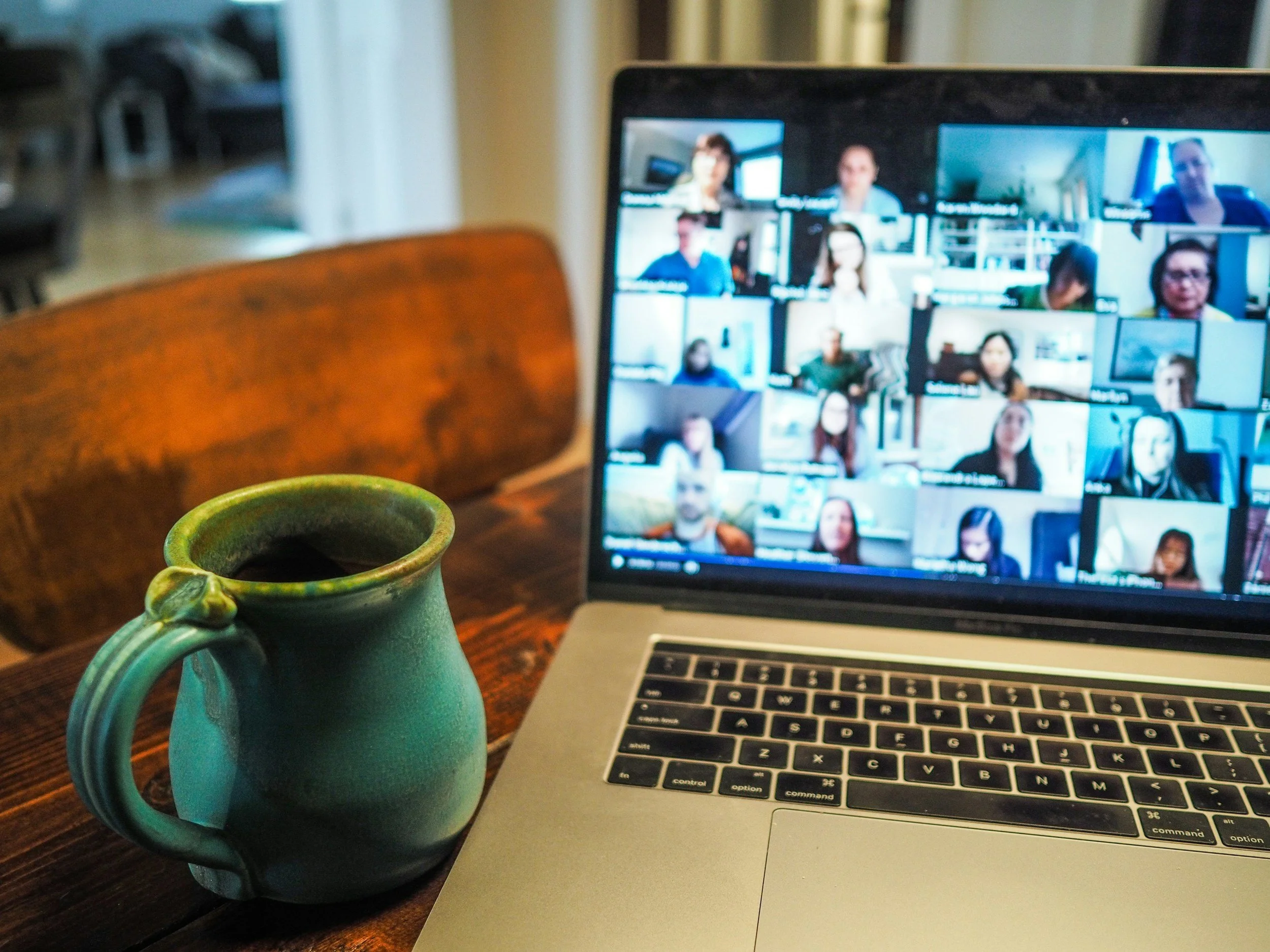
Virtual or in-person therapy? A Syracuse, NY therapist explains the real differences, what each feels like, and how to decide which therapy format fits you best.
If you’re looking for a therapist in Syracuse, one of the first decisions you’ll probably make is whether you want to meet in person or virtually.
And there isn’t one right answer.
Some people love coming into an actual therapy office. They like physically leaving their normal environment, sitting down with another human being, and having a space that exists specifically for therapy.
Other people would rather talk from their couch with their dog next to them and absolutely no commute involved.
Both are valid.
And the differences between virtual and in-person therapy are about more than convenience.
Here’s what I think is actually worth considering.
What Does In-Person Therapy Feel Like?
There is something about physically going somewhere for therapy that some people really like.
You leave work or home.
You drive to the office.
You walk into a room where, for the next 50 minutes, you don’t have to answer an email, unload the dishwasher, or wonder whether someone in the next room can hear you.
For some people, that separation matters.
It can create a natural transition into and out of therapy.
You also get the experience of being physically in the same room with your therapist, which some people simply prefer.
There are little things that happen naturally in person. Body language can be easier to notice. Silence can feel different. You aren’t looking at yourself in a tiny box on a screen.
And sometimes it’s just nice to talk to an actual person without a computer involved.
What Are the Downsides of In-Person Therapy?
Mostly, real life.
You have to get there.
That means accounting for driving, parking, weather, work schedules, childcare, and whatever Syracuse has decided to do with the roads that day.
A 50-minute therapy session might realistically require 90 minutes or more of your day once you factor in travel.
For people with packed schedules, that matters.
It may also limit which therapist you can see because you’re restricted to providers within a reasonable driving distance.
And depending on what you’re working on, the therapy office isn’t necessarily where your symptoms actually happen.
Your anxiety might show up at home.
Your OCD might be loudest in your kitchen.
Your panic might show up when you’re getting into your car.
Sometimes being in your real environment during therapy can actually be useful.
What Does Virtual Therapy Feel Like?
Virtual therapy is still therapy.
We’re still talking about the same things.
We’re still doing the work.
I’m just on your screen instead of sitting across from you.
For many people, virtual therapy makes treatment significantly easier to fit into real life.
You can finish a meeting, close your laptop, and be in therapy five minutes later.
You don’t have to commute.
You don’t have to worry about weather.
And you can meet with a therapist who may be nowhere near your town, as long as they’re licensed to provide therapy where you’re physically located.
That last piece can be particularly important if you’re looking for specialized treatment.
If you need someone who specifically treats OCD with Exposure and Response Prevention (ERP), for example, expanding your search beyond the therapists within a 15-minute drive can give you more options.
There Are Some Things I Actually Like About Virtual Therapy
Especially as an anxiety and OCD therapist.
Sometimes I get to see the environment where the problem is actually happening.
Instead of telling me about the cabinet you’ve been avoiding touching, you can show me the cabinet.
Instead of describing the object OCD has decided is “contaminated,” it’s sitting right there.
If we’re working on exposures, being in your normal environment can give us opportunities we wouldn’t necessarily have sitting in my office.
Virtual therapy can also make treatment more accessible for people whose anxiety makes getting to an office difficult.
That doesn’t mean we automatically accommodate avoidance forever.
But it can give us a place to start.
What Does Virtual Therapy Lose?
There are tradeoffs.
You don’t get the physical separation of leaving your life and walking into a therapy office.
Privacy can also require more planning.
If you’re trying to talk about your relationship while your partner is working twelve feet away, that’s probably not ideal.
Technology occasionally decides it would like to participate in treatment.
Your Wi-Fi cuts out.
Your headphones die.
Your screen freezes at the least flattering possible moment.
And some people simply don’t feel as connected through a screen.
If that’s you, that matters.
Therapy requires you to talk about things that can be uncomfortable and vulnerable. If being physically in the room with someone makes that easier, that’s worth considering.
So, Is Virtual or In-Person Therapy Better?
I don’t think that’s the most useful question.
A better question is:
Which format makes it easier for you to consistently show up and actually engage in therapy?
Because the theoretically “perfect” therapy format isn’t very helpful if getting there every week is a logistical nightmare.
And convenience isn’t everything if you know you struggle to focus virtually and feel much more present when you’re sitting across from someone.
This is about fit.
A Few Questions to Ask Yourself
If you’re deciding between virtual and in-person therapy, think about:
Where do I have the most privacy?
If you live with other people, do you have somewhere you can comfortably talk for 50 minutes without worrying about being overheard?
How much does travel matter to me?
Would adding a commute make therapy significantly harder to fit into your week?
Do I feel connected to people virtually?
Some people barely notice the screen. Other people absolutely do.
Would being in my own environment help with what I’m working on?
This can be especially relevant for OCD, panic, agoraphobia, and other anxiety disorders where real-life situations are often part of treatment.
Am I choosing virtual therapy because it’s convenient or because I’m avoiding something?
That’s not automatically a reason to choose in-person therapy.
It’s just useful information.
If anxiety is making it difficult to leave your house, drive, or be somewhere unfamiliar, that’s something you and your therapist can eventually work on rather than quietly organizing treatment around forever.
You Can Also Change Your Mind
This part gets overlooked.
You aren’t choosing your therapy format for the rest of your life.
Maybe virtual therapy makes sense during your busiest season at work.
Maybe you start virtually and eventually decide you’d rather come in.
Maybe you usually meet in person but occasionally need a virtual appointment because life happens.
Your needs can change.
Therapy can adjust with them.
Virtual and In-Person Therapy in Syracuse, NY
I’m Michelle Stiles, LMHC, an anxiety and OCD therapist based in Syracuse, New York.
I offer in-person therapy in Syracuse as well as virtual therapy for adults throughout New York State.
I specialize in treating OCD, panic disorder, health anxiety, and anxiety disorders using evidence-based approaches, including Exposure and Response Prevention (ERP) for OCD.
If you’re not sure whether virtual or in-person therapy would make more sense for you, you don’t have to figure that out before reaching out.
That’s exactly the kind of thing we can talk about during a consultation.
Educational disclaimer: This article is for educational purposes only and is not intended to replace individualized mental health care.

Hi, I’m Michelle
I’ve been working in mental health since 2010 and struggling with anxiety for oh, idk, maybe my entire life.
And with my lived experience having anxiety, I know what works, what doesn’t, and what makes things feel worse. In here, you’re not alone, and I’ll work with you to shed the shame along with the anxiety. And by using evidence-based practices, I’ll help you recover, not just feel better.